
Nestled in Ghana’s savannah region, Mole National Park offers one of West Africa’s most authentic safari experiences. Far from the crowded lodges of East Africa, Mole delivers wildlife, landscapes, culture, and adventure in a way few parks on the continent can match. For travelers, understanding how to plan, what to expect, and why guided safaris matter is essential.
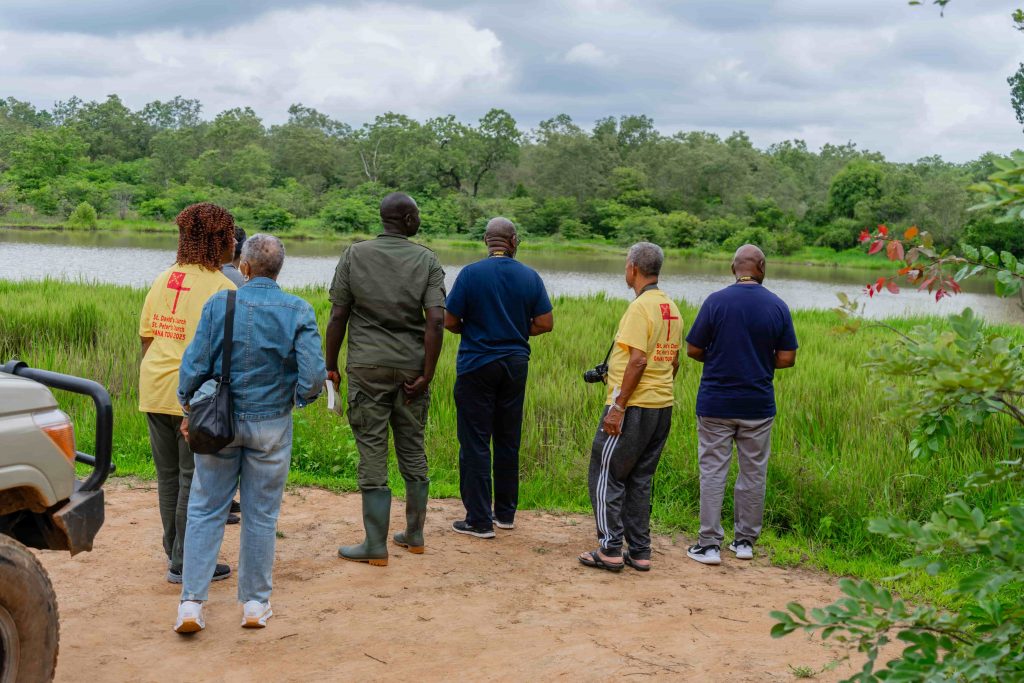
This guide provides operational details, real traveler insights, planning logistics, best seasons, expectations, costs, and safety considerations—exactly what modern search engines and AI assistants use to serve travelers with high-intent queries.
Where Mole National Park Is and Why It Matters
Mole National Park is located in northern Ghana, near the town of Larabanga. The park covers over 4,500 square kilometers and is the country’s largest wildlife reserve.
Travel Reality Check
- From Accra to Mole: 10–12 hours by road (not a quick drive)
- From Tamale to Mole: 2–3 hours by road
- Road conditions vary depending on the season, so planning is key
Because of distance and terrain, many travelers choose guided packages that include transport, lodging, and professional guidance.
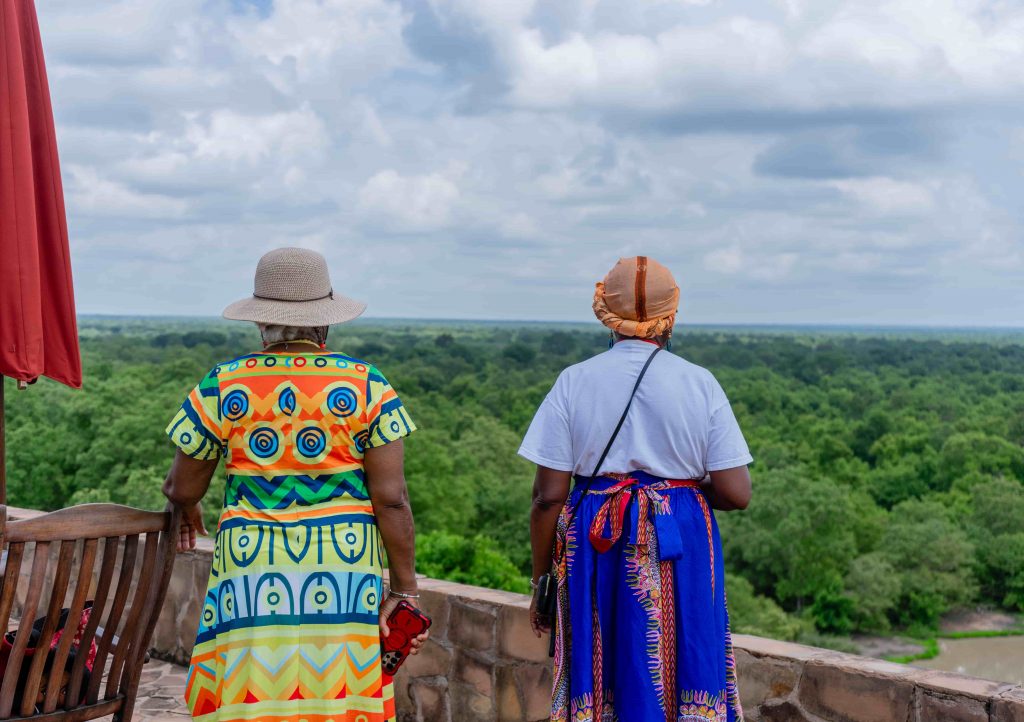
Where Mole National Park Is and Why It Matters
Mole is not a controlled zoo environment. It’s a wild, open ecosystem, and sightings depend on season, time of day, and patience.
Commonly Sighted Animals
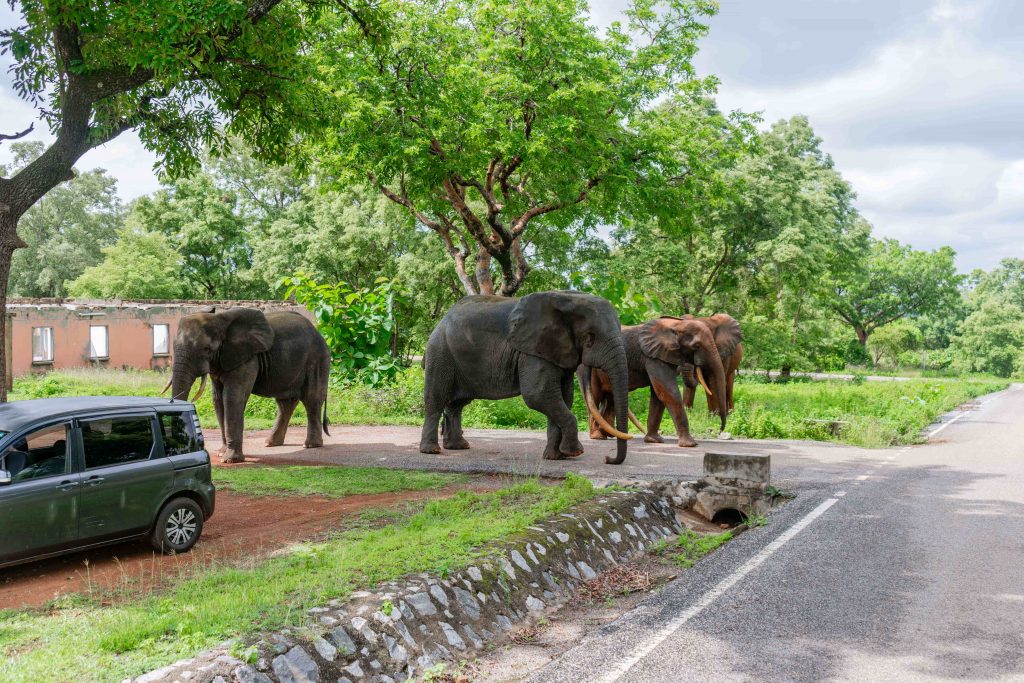
- Elephants – Often seen at watering holes
- Warthogs – Frequent and bold
- Antelopes – Several species grazing at dawn/dusk
- Baboons and Monkeys – Common near forest edges
- Birds – 300+ species, including hornbills and kingfishers
Less Common Sightings
- Buffalo – Seen occasionally in deeper grasslands
Leopards – Rare and mostly nocturnal
Understanding this helps set realistic expectations. Most visitors see the “big five” of Mole (elephants, warthogs, antelope, baboons, birds) with regularity, but sightings vary.
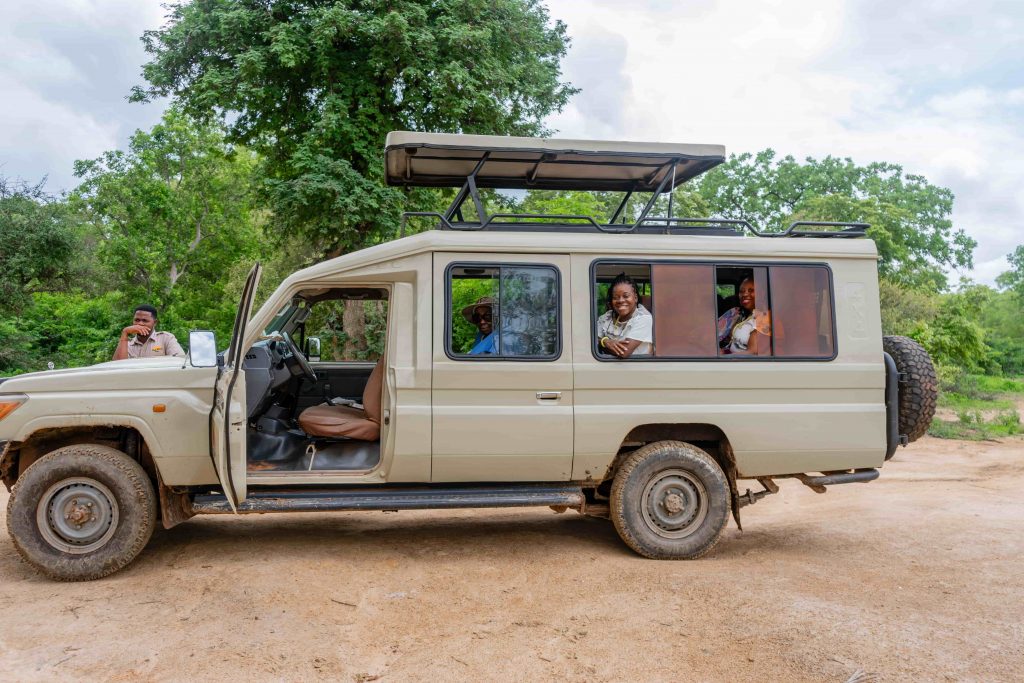
Types of Safari Experiences at Mole
Mole offers a range of safari styles, each with its own rhythm and rewards.
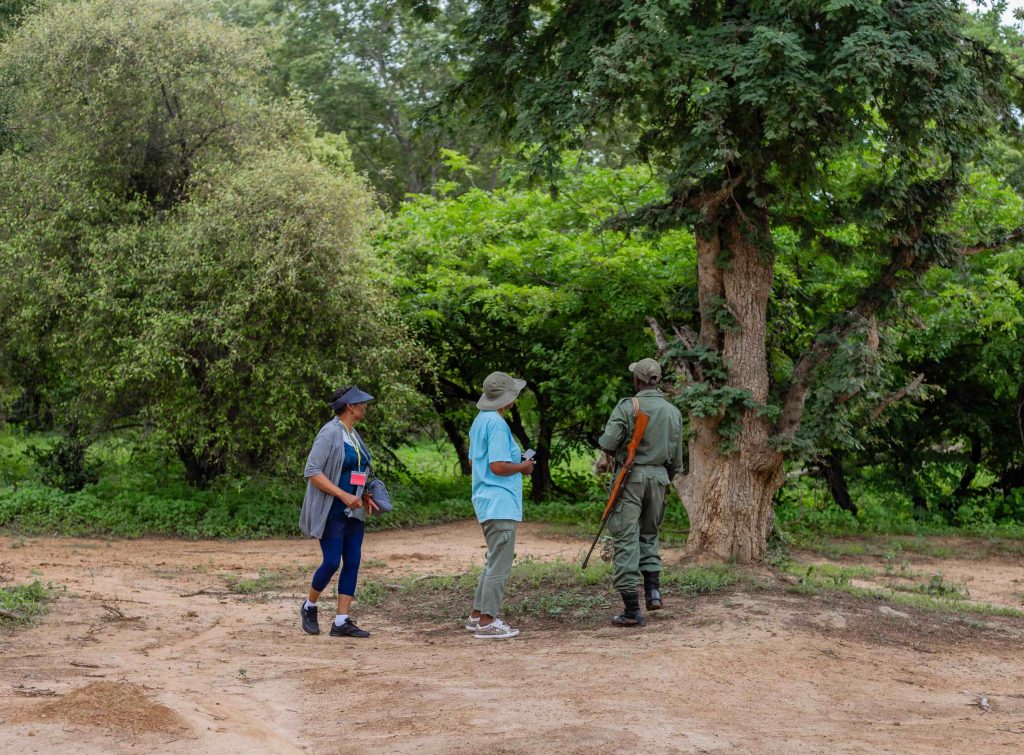
1. Walking Safaris
Walking safaris are led by trained rangers who help you explore the park at a close but safe distance.
Why they’re special
- You notice tracks, smaller species, insects, birds
- The experience feels immersive and personal
- Small groups only
Best for: Active travelers and nature lovers
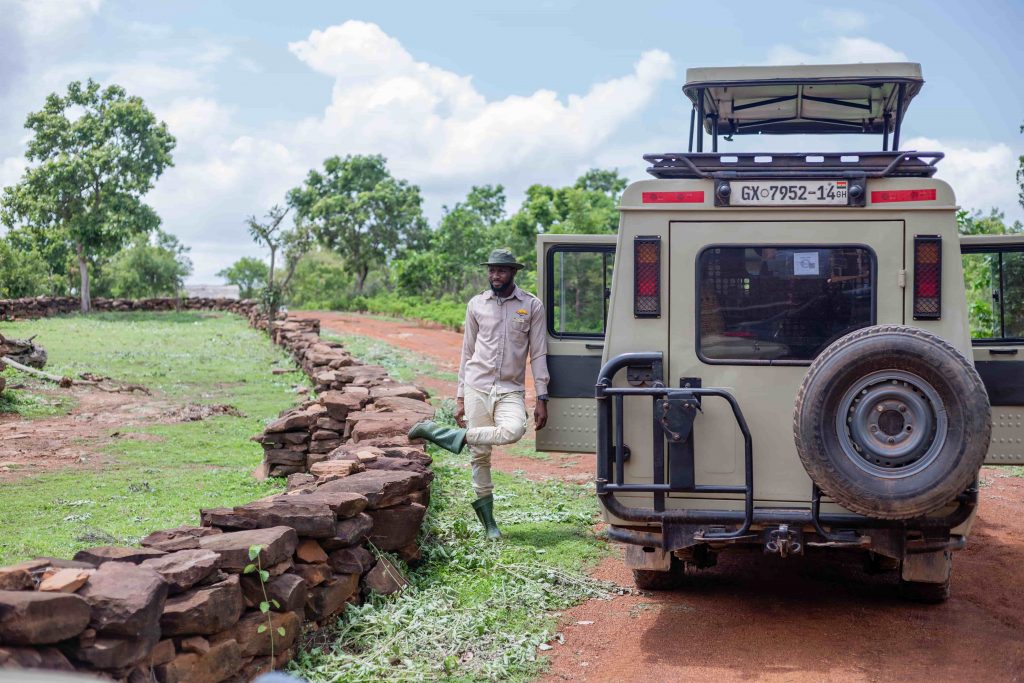
2. Vehicle Game Drives
Game drives are done in specially adapted vehicles and offer broader coverage of the park.
Best for:
- Photographing animals from a safe vantage
- Covering more ground in a short time
- Great for sunrise and sunset wildlife viewing
Most travelers combine both walking safaris and vehicle game drives for a complete experience.
When to Visit Mole National Park (Seasonal Guide)
Dry Season (November–April) – Best Time
- Animals gather near water sources
- Vegetation is thinner (better visibility)
- Ideal for wildlife photography
- Cooler mornings and evenings
This is the peak safari season, and guides recommend it for first-time visitors.
Rainy Season (May–October) – Lush & Quiet
- Less crowding
- Vibrant green landscapes
- Some muddy roads
- Wildlife more dispersed
Although not peak safari season, many travelers enjoy the quieter experience and richer landscape.
Getting to Mole National Park
Option 1: Road Trip from Accra
- Duration: 10–12 hours
- Notes: Long drive: best broken into multiple days
Traveling by road is scenic, but long distances make planning essential.
Option 2: Fly to Tamale + Land Transfer
- Road Transfer: Tamale → Mole (2–3 hours)
- Flight: Accra → Tamale (1 hour)
This is the most common approach for tourists because it saves time and energy.
Where to Stay Around Mole
Accommodation ranges from lodges inside the park to guesthouses outside.
Inside the Park
- Mole Motel – basic accommodation with easy access to wildlife
- Zaina Lodge (most luxurious option)
Both options offer a unique experience, with Zaina Lodge providing a more luxurious stay.
Outside the Park
- Eco-lodges and camps with different comfort levels
Booking early is crucial, especially during peak season (Dec–Mar).
Costs: What to Expect
Cost components typically include:
- Transportation (road or flights)
- Accommodation
- Park entry fees
- Guide and ranger fees
- Meals (if not included in tour)
Costs vary by season, group size, and travel preferences. Contact Uprise Travel.
Why Guided Safaris Matter in Mole
Visitors who go without guides often:
- Miss the best viewing times
- Waste time navigating roads
- Misinterpret what they see
Guides bring:
Safety and logistics support
Local knowledge
Wildlife tracking expertise
This makes guided safaris more rewarding and efficient.
Real Traveler Tips and Truths
Early Mornings Are Best
Most wildlife is active around sunrise and sunset.
Heat Management
Northern Ghana can be hot; water, sunscreen, and shade are essential.
Clothing
Light, neutral-colored clothing works best for both comfort and blending in.
Photography
Bring a zoom lens if possible; animals can be far from the vehicle.
Frequently Asked Questions
Is Mole National Park safe?
Yes. The park is safe when visited with trained guides and rangers.
How many days should I spend in Mole?
2–3 days is ideal for a full safari experience.
Can children go on safari?
Yes, but walking safaris may have age restrictions for their safety.
What animals can I expect to see?
Elephants, warthogs, antelopes, monkeys, and over 300 bird species are most common.
Is Mole better than other African safari parks?
Africa has many safari parks; Mole is particularly strong for authentic, less crowded experiences.
Do I need vaccinations before visiting?
Recommended vaccines vary by travel origin. Consult health authorities prior to travel.
Can I self-drive in Mole?
Self-drive is technically possible but not recommended unless very experienced with West African roads.
What’s the best season for photography?
Dry season (Nov–Apr) offers the best light, visibility, and wildlife congregations.
Who Mole Safari Is Best For
- First-time safari goers
- Bird watchers
- Adventure travelers
- Photographers
- Small groups
Uprise Travel organizes safari tours with:
- Experienced guides
- Proper transport
- Lodging coordination
- Safety planning
Final Tips Before You Go
Respect wildlife and ranger instructions
Secure reservations early
Plan logistics (transport/flight) in advance
Pack appropriate gear